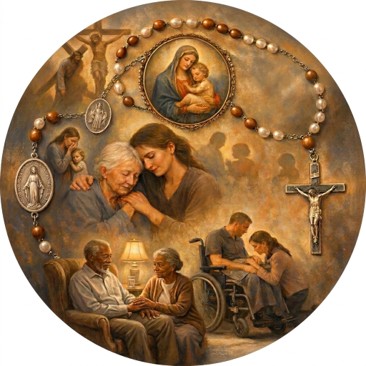
Growing Old Grace-fully is hosting an online series of Devotions to our Lady in October, the month of the Holy Rosary.
Following on from our online Stations of the Cross during Lent, these Devotions have once again been written by Fr. Eamonn Hegarty and Michelle Anderson with carers specifically in mind. They will include reflections and prayer for carers and also those they care for. As we pray the Rosary we ask the Mary, who cared so faithfully for Jesus, to walk beside every caregiver and every person in need of care.
The first of the series will be a live online session where we will pray the Joyful Mysteries of the Rosary. This will be held on Tuesday 6th October at 7pm.
A recorded session, praying the next three Mysteries of the Rosary, will then be released each week during October on the Growing Old Grace-fully YouTube channel. You can access (and follow) the channel by clicking the button below.
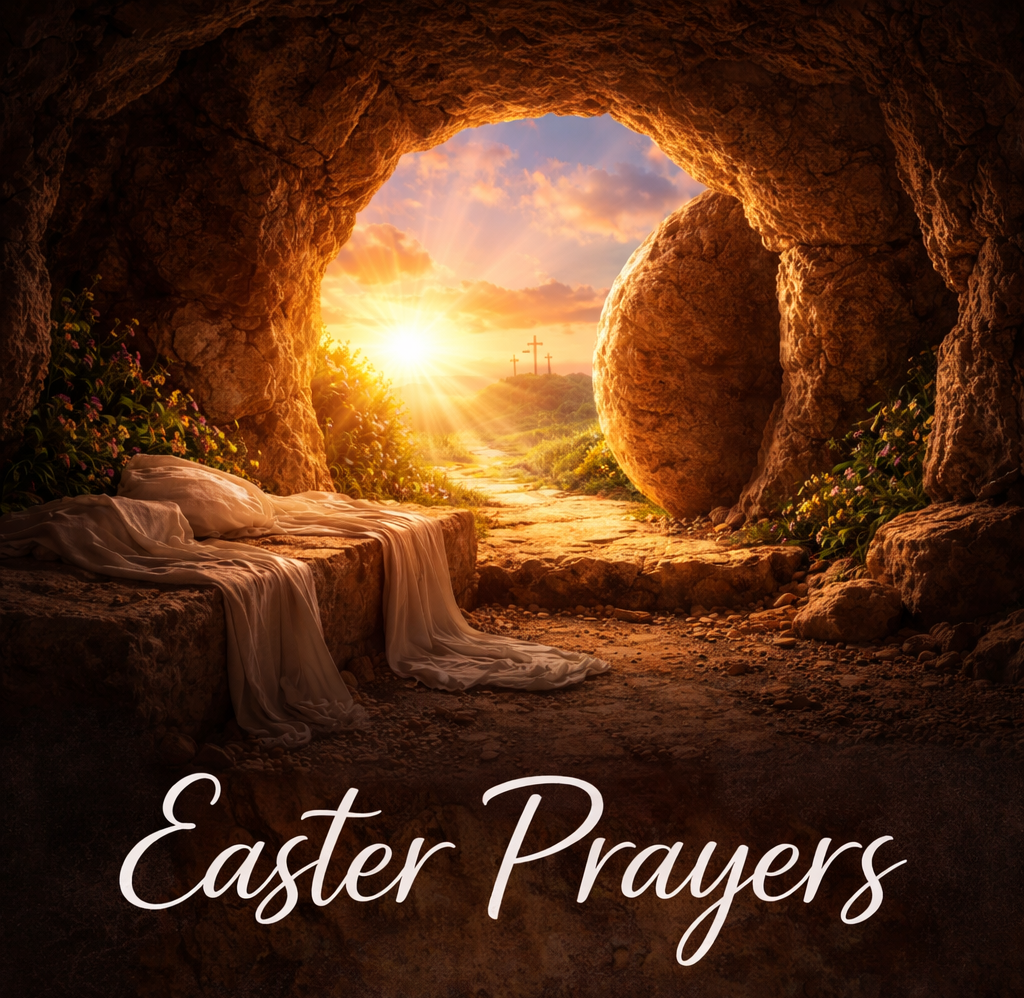
Easter, the glorious celebration of the resurrection of Jesus our Lord and God, is a feast and season rooted in renewal, light and hope.
Easter invites us, especially in later life and old age, to reflect not only on Christ’s rising but also on the quiet transformations throughout our own lives. The moments of joy and sorrow, success and failure, achievement and loss that have shaped us through a lifetime of walking, sometimes steadily, sometimes falteringly, toward the light. The eternal hope of Easter is God’s enduring promise that new life can and will emerge, for all who seek it, whatever age and stage of life.
Growing Old Grace-fully, Easter 2026
Our journey towards the empty tomb
Loving God, in this Easter season of new life and quiet hope, we come before You with hearts shaped by many years.
We thank You for the journey behind us— for the joys that have lifted us, the sorrows that have deepened us, and the faith that has carried us through every season.
As we grow older, Lord, teach us to see Your resurrection not only in grand moments, but in gentle mornings, steady breaths, and the kindness we both give and receive.
When our bodies tire and our steps slow, renew our spirits with Your living presence. When memories crowd our minds—both sweet and painful— hold us in Your peace and remind us we are never alone.
Help us to trust that even now, You are still bringing new life within us— new patience, new understanding, new grace. May we face each day with quiet courage, resting in the promise that Your love does not fade with time.
And as Easter proclaims life beyond death, fill us with calm assurance and hope, that our journey leads ever closer to You.
Amen.
Growing Old Grace-fully
You Are the Resurrection
How wonderful, Lord Jesus, you came back You suffered death but conquered it You laid in the tomb but on the third day You rose again O joyful day, Lord Jesus, when you returned You are the resurrection, our hope and our life O glorious and victorious Redeemer Help us not to be afraid of death For we must pass through it to see you face to face And on the last day we will rise again For you said so Let us rejoice and praise you Our Blessed and triumphant Lord On this happy, joyful feast.
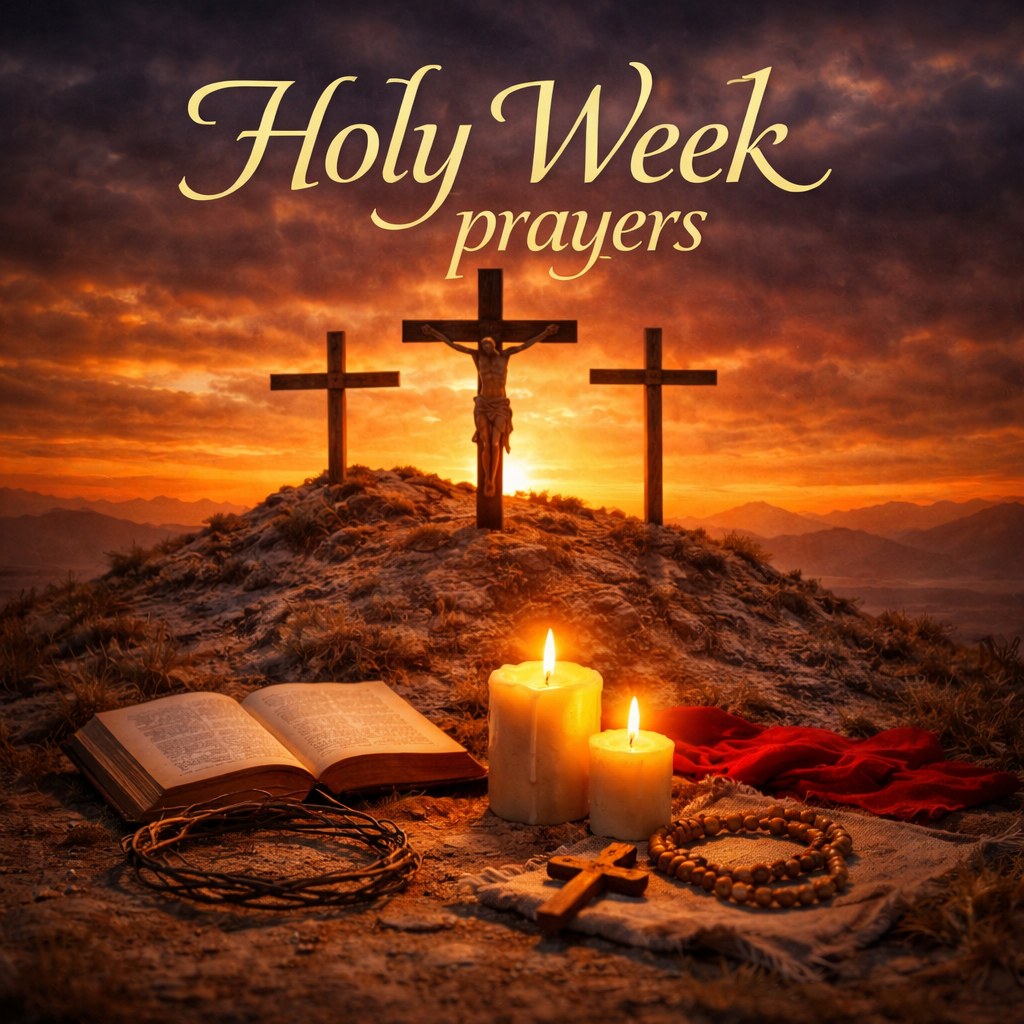
Holy Week, the holiest week of the year, invites us all to reflect on the ultimate sacrifice made for all of us. As we journey through these days – recalling Jesus Christ’s fear, suffering, anguish and death and then the glory of Easter – we are gently reminded that every stage of life carries its own meaning and grace.
In later life, the challenges of ageing – whether physical ailments, aches and pains, loneliness, loss or the weight of memories – can trouble us and lead us to doubt, anxiety and sadness. Yet Holy Week speaks directly into these experiences. It reminds us that suffering is not without purpose, that quiet endurance has dignity, and that even in moments of loss, there is the promise of new life.
We have compiled some prayers for Holy Week below, prayers to help us reflect through this week.
Through reflection and prayer, may this Holy Week become a time of peace, connection, and renewed hope.
Growing Old Grace-fully, Holy Week 2026
A Holy Week prayer for older people
God our Father,
As we walk through Holy Week, we remember Jesus on the road to Calvary— weighed down, yet faithful, wounded, yet still moving forward.
So too in our own lives, as the years gather and our strength changes, we carry burdens we did not once know— aches in body, losses in heart, and the quiet letting go of what was.
Teach us, like Christ, to walk this path with courage and trust, to accept each step with grace, and to know we are never alone.
And as Easter dawned with light and new life, remind us that growing older is not only loss, but also transformation— a journey toward deeper peace, renewed hope, and the promise of resurrection within us.
Amen.
Growing Old Grace-fully
Prayer for Holy Week
Lord Jesus,
This Holy Week we follow you on your sorrowful and glorious journey, your journey to the Cross and Resurrection.
Today we ask that we may walk with you, give us grace to see the deep love you show us.
As you were welcomed with joy and acclaim to the Holy City, your betrayal by the crowds soon overwhelmed their cries of Hosanna.
On the Cross, you made yourself servant taking the sins of the world upon yourself.
May our lives reflect your desire to serve God our Father first; that we may serve you in our brothers and sisters.
When we face suffering and disappointment, may we know your love.
When we are feeling lost, may we know that you are with us.
When we are worried, may your Cross be a sign of hope and strength.
May this Holy Week be for us a time of renewal in faith and love.
Jesus my Lord, let me strengthen my courage by taking on the courage of all those people who have been “centurions” for me.
Many have faced disasters and hard times with great constancy. The upper hand of evil never turned them against you. They kept going.
Let me be like them, Lord. No matter what the cross, let me never stop declaring you to be “truly the Son of God, the source of my hope, the reason why I will never quit on life.
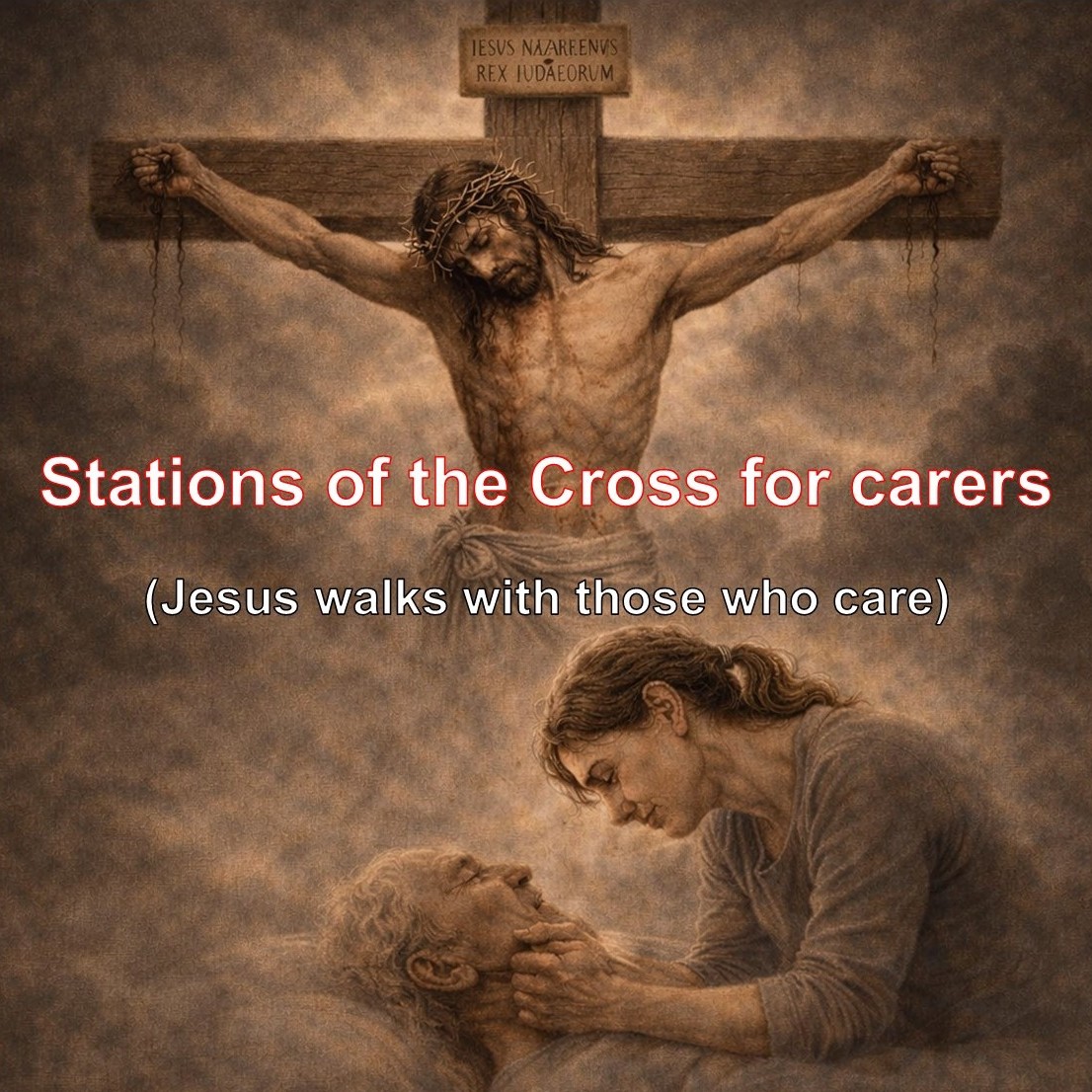
The special Stations of the Cross for carers is now available to watch online our our YouTube Channel.
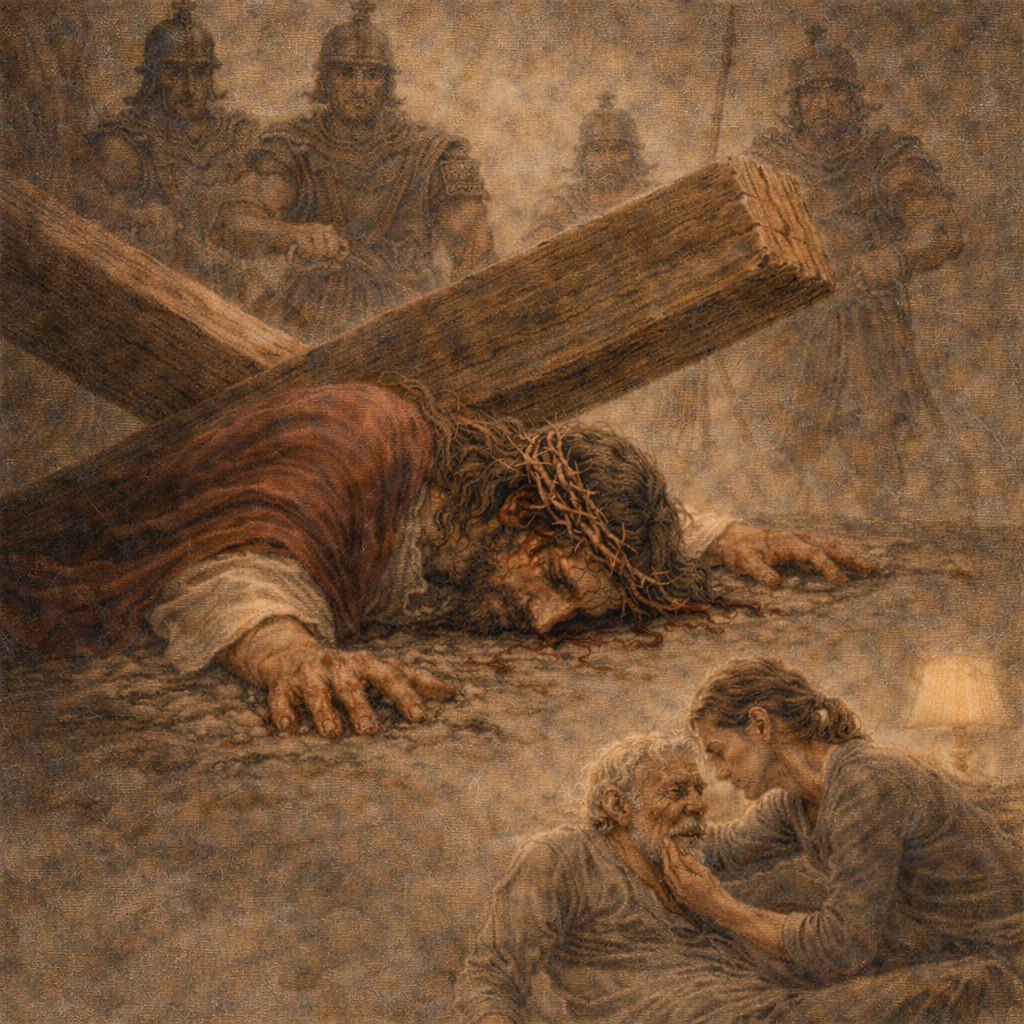
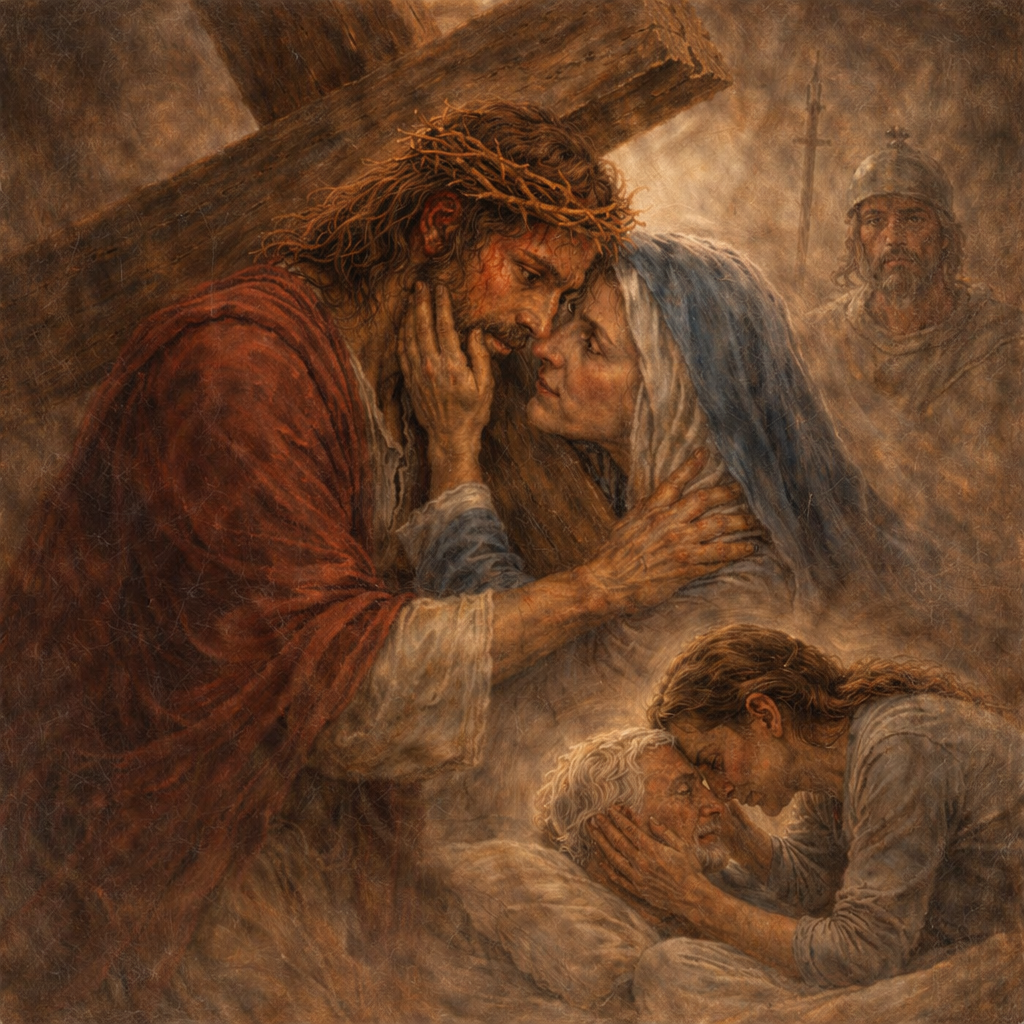
These special Stations of the Cross have been written by Fr Eamonn Hegarty and Michelle Anderson specifically with carers in mind. Fr Eamonn is Parish Priest of St. Mary of the Angels, Batley and St. Patrick’s, Birstall and Michelle is Co-ordinator of the Growing Old Grace-fully Carers Project. Through the Stations of the Cross, we discover that Jesus walks this road with us. These Stations invite carers to see their own lives reflected in Christ’s journey – not as something to be explained away, spiritualised too quickly, or endured in silence, but as a place where God is already present and at work.
You can watch the Stations of the Cross for carers by clicking the button below.
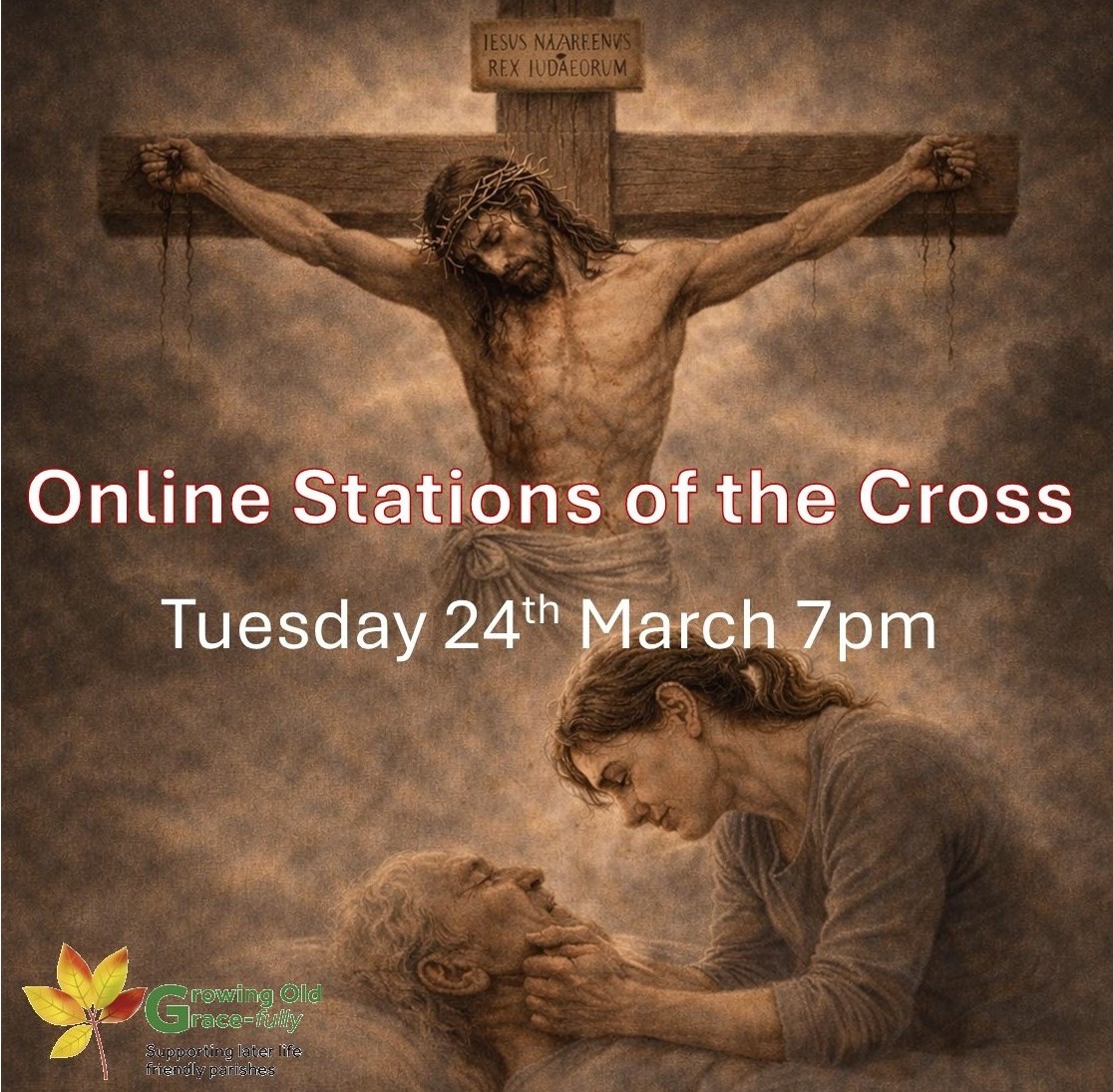
Growing Old Grace-fully is hosting an online Stations of the Cross on Tuesday 24th March 7pm – 8pm. These special Stations of the Cross have been written by Fr Eamonn Hegarty and Michelle Anderson specifically with carers in mind. Fr Eamonn is Parish Priest of St. Mary of the Angels, Batley and St. Patrick’s, Birstall and Michelle is Co-ordinator of the Growing Old Grace-fully Carers Project.
The invitation to carers through the Stations
Through the Stations of the Cross, we discover that Jesus walks this road with us. These Stations invite carers to see their own lives reflected in Christ’s journey – not as something to be explained away, spiritualised too quickly, or endured in silence, but as a place where God is already present and at work. While the event is part of the Carers Project it is open to all.
Join us on Tuesday 24th March as we approach Holy Week and prepare for the Holy Season of Easter.
Forty days to return to the Lord with all our heart. It is a season marked by prayer, fasting, and almsgiving, but also by honesty — honesty about our frailty, our need for mercy, and our hope in the promise of resurrection. In later life, this invitation carries a particular depth. As the years gather behind us and the horizon ahead feels nearer, Lent can become not only a time of repentance, but a season of profound wisdom, surrender, and trust.
Ageing brings its own kind of desert experience. There may be physical weakness, loss of independence, bereavement, or the quiet ache of loneliness. We may carry regrets alongside cherished memories. Yet the desert is not empty — it is the place where God speaks tenderly to the heart. In later life, prayer often becomes simpler and deeper: fewer words, more silence; fewer plans, more presence. Lent reminds us that growing older is not a diminishment of vocation, but a refining of it. We are called to witness through patience, to intercede through faithful prayer, and to hope steadfastly in Christ’s victory over suffering and death.
At the same time, we live in a world marked by uncertainty and turmoil. War, displacement, economic hardship, environmental crisis, and social division weigh heavily upon our spirits. Many older people look upon today’s world with concern for children and grandchildren, wondering what future awaits them. Lent does not ignore these realities. Instead, it draws them into the heart of Christ, who carries the suffering of the world upon the Cross. Our prayers in this season unite our personal vulnerabilities with the wounds of humanity. In doing so, they become powerful acts of love and solidarity.
These Lenten prayers are offered especially for those in the later seasons of life. They acknowledge the challenges of ageing while affirming the enduring dignity and spiritual fruitfulness of every year lived in Christ. They hold before God the anxieties of our time and ask for peace, justice, and renewal. Above all, they trust that even as our outer selves grow frail, our inner selves are being renewed day by day.
May this holy season be for you a time of gentle grace — a journey through the desert that leads not to desolation, but to Easter joy.
Growing Old Grace-fully
The Grace of Forty Days
The grace of forty days Time to make the desert journey and renew our way to life.
Time for testing and for changing. Time to trust the word of God.
Time to recognise holy presence and share Cyrene’s work.
Time for forgiveness and for healing and to repent our broken lives.
Time to build God’s dwelling with us and proclaim full life for all.
Time to watch and wait with Jesus and to prepare the upper room.
Time to turn our lives again to God and to transform our world with love.
Amen
Pat Pierce/CAFOD
Forgive Us
For closing ourselves to the driving of your Holy Spirit; for choosing to live in places of comfort rather than being led into the wilderness; for letting fear of the person who is different rule our lives, rather than letting your love for all people fill our hearts; for our separation from one another in the Body of Christ; for not trusting that you hold the future in your hands.
Amen
Elizabeth Welch
In the Thicket
God’s Truth as God knows it as it can be held in the human tongue as it can survive translation from one tongue to another as it can survive interpretation by scholars as it can survive the teachers of teachers as it can survive the experience and understanding, and Language of every human as it is -visible to those who see – still in the made World beautiful as it partly may be restored by good sense, loving kindness and Good will, by inspiration by beautiful work
Amen
Wendell Berry
A prayer for times of anxiety
Dear Lord,
In moments of anxiety grant me peace. Calm my restless heart and fill my mind with your reassuring presence. In You may I find refuge and comfort in Jesus name.
The last time I wrote a Lent Reflection for Growing Old Grace-fully we were in the throes of the Covid global pandemic. Now we see war and struggles around the world in Ukraine, Gaza, the West Bank and Israel, the Sudan, Nigeria, and so many countries globally. Each is unique in its context but the suffering, injury and loss of life have universal similarities in the way people are hurting, deeply worried, struggling for meaning and wondering how to continue. Climate change, conflict, and poverty are combining to drive people from their homes. Nationalism and racism seem to be increasing. Love and compassion are evident, but hard line rhetoric is threatening community dialogue and discouraging diverse communities from working out daily life issues together.
It need not be like this…
Perhaps this Lenten Season is a time to reflect on how we each travel with Jesus on his Way to Jerusalem to Calvary, and the hope of His Resurrection. Reflecting too closely on how governments and political leaders are responding may be too painful at times. Instant news means we know almost immediately what is happening. We now have to factor in possible fake news and the toxic culture that exists in parts of the Internet. BUT, as adults, we also need to discern, pray and act in a way that leads to God and Resurrection.
As Micah wrote “And what does the Lord require of you? To act justly and to love mercy and to walk humbly with your God.” (6:8) ( New International Version )
Desert Experience
Jesus went into the desert at the start of his ministry. It was a time of isolation, hardship and temptation. A time to reflect and prepare for ministry. Perhaps our Lent journey leads us into a desert: a place alone to concentrate on God and abstain from comfort and distraction.
The Desert Mothers and Fathers lived during the 3rd to the 5th centuries in Egypt and the Middle East. They lived “a white martyrdom” where they left their communities, led a solitary ascetic life of poverty and self denial, whereas “a red martyrdom” meant losing their lives for God. Monasticism developed from these “white martyrs” as hermits tended to attract disciples and subsequently communities.
I go to North Wales to a Retreat Centre most years where a number of us learn about the local Celtic Saints. Amongst these, Saints Beuno, Seiriol, Winifred and Melangell lived a “white martyrdom” as hermits: a radical life of poverty, solitude and prayer, until followers sought them out and baptismal communities grew around them. There are many stories of saints continuing to seek solitude and escape at times from community life. It is believed that after finding St Seiriol’s Island (Puffin Island) and Anglesey too crowded, St Seiriol would set off at low tide to Penmaenmawr on the North Wales coastline opposite, up towards the area of Noddfa, the Retreat Centre where I stay! I am constantly aware of “Holy ground” when I am there. On Lindisfarne, St Cuthbert would do the same, spending time alone on a tiny island off the Northumbrian Coast and finally one of the Farne Islands.
How do we manage or even value time alone?
Some of the Celtic Saints talked about the desert experience of being at the top of a mountain, or by the sea or on the sea: remote places where they could live and pray or wander.
Might we think about those places in that way too?
Some saints like the 5th century Irish St Brendan was a sea explorer searching for the Promised Land. St Samson, another 5th century Saint, sailed between Ireland, Wales, Cornwall and Brittany, the route of other Celtic Saints. He founded monasteries but also for him the sailing on the desert Sea was a pilgrimage of self discovery, prayer and Redemption in itself. For some Celtic Seafarers the journey was more important than the destination… until the Final Destination with God. Seeking God….
Prayer
Why have I spent time this year on the Celtic Saints for Lent? Because their whole life tried to be a prayer. There were prayers for times of day, for meals, for different tasks, for protection, for everything. For the Celts as for many others, the veil between life and death was thin. Lent would be a time to think about Jesus’ life and death. Perhaps one way to respond to the challenges of our world – and to remind ourselves not to despair and that there is ‘nothing new under the sun’ and ALWAYS HOPE IN GOD, is to study and pray with some of the Celtic Saints and reflect on our own life and death and rising with the Resurrected Lord at Easter.
Pilgrimage and Healing
St Winifred (Gwenfrewi in Welsh) was a 7th century Celtic Saint. Her (Winifred’s) Well for Baptism and Healing is at Holywell in North Wales and later became a great centre of pilgrimage in the Middle Ages. She was a niece of St Beuno. She was raped by a Welsh Prince, survived despite rumours of her death, protected and nursed by St Beuno and subsequently she withdrew to Gwytherin south of Conwy. She lived as a hermit and a community grew around her. She became an Abbess. She was known as a wounded healer. An ancient church at Gwytherin, with a Bronze Age burial mound next to it and surrounded by ancient yew trees thousands of years old, became an early pilgrimage site in the 7th-8th century. Her body was supposed to have been transferred in the 12th Century to Shrewsbury Abbey but many believe she is still buried at Gwytherin. Pilgrims continue to visit the peaceful old church for prayer. During Lent as a saint, a survivor of violence, a wounded healer, Winifred might be someone to pray with for solace and healing.
Prayer and Nature
Melangell is the site of the Cell of St Melanga. She was a 7th century Irish Princess escaping an arranged marriage. She landed in Wales and walked to a valley in Powys where she protected a hare from a Prince out hunting. She is known as the patron saint of hares. She was given land in the valley where she lived as a hermit, later as Abbess of a nunnery that developed there at Pennant Melangell. It remains a pilgrimage site where people come to the ancient yew trees thousands of years old and the old church that was built in the 12th century. Perhaps during Lent we too can imagine ourselves in the beautiful deep valley seeking solace and strength in the Church, praying with St Melanga and sitting among the yew trees, as so many have done before.
Focus
So, Lent may be about being abstemious, alone or with companions, where we focus on God, without too much distraction on a pilgrimage journey towards Easter. We might be seeking solace, healing from violence or a time to appreciate the beauty and strength of nature. We might be at a crossroads in our lives. As older people we might feel tired and overwhelmed by world events. The Celtic Saints (and there are many others of course) may be guides during this time.
Good works
Lent may also be about good works: working with a good cause, or giving money to charity. There are many opportunities for this. If we are housebound or short of money, prayer is, as always, invaluable. Prayer for others is always needed.
I travelled in a taxi recently. I learned on the journey the driver came from Sudan. He is now an engineer living in a North of England city with his wife and family. So why does he also drive a taxi? Because he sends the taxi money back to the senior class of a school in Sudan to buy extras for the pupils and their families, to persuade the pupils to stay at school for another year. He told me extra education also increases the likelihood of boys treating girls better in the future….
Vigils
Lent may be about keeping Vigil. On Maundy Thursday some of us may keep Vigil with Christ at Gethsemane. For me the image of Mary the mother of Jesus keeping Vigil with the other women and St John at the foot of the cross at Calvary is especially powerful. They risked death, attack and must have experienced horror and sadness at the torture and death of their beloved Jesus. Vigils can focus on issues of today: for example: in big cities or small towns about the situation in Gaza, the West Bank and Israel; the silent monthly Vigils outside the Home Office about Asylum Seekers; and the Women in Black who regularly silently stand vigil in Leeds and elsewhere to remember the children and adults who are suffering and have died in the Middle East as a result of war. Silent, peaceful Vigil can be a Lenten Practice, a Witness, where we pray for peace and justice, for asylum seekers and for victims of war, sometimes at the risk of hostility from others. If we cannot be physically present we can pray for a variety of issues. My housebound 96 year old mother put a light in her window on Holocaust Memorial Day this year. The response was an anti-semitic remark from a neighbour. It can take courage to do what we believe in. It can also connect us to other human beings and give us a sense of community and solidarity.
Celtic spirituality in Lent
This is multi faceted and encompasses a creative dynamic of stillness and journey. In Lent do we make a spiritual journey or consolidate our search in one place? Do we spend time alone like a hermit or do we seek community? Do we stay with the Known or do we venture into the Unknown? These are not either/ or alternatives, they can be both / and alternatives. As Older People who are housebound we might not believe we have a choice, but spiritually, in our prayer life we can wander and seek.
The Seeking of God in the desert, the mountain top, valley, among trees or on the sea.
Perhaps this Lent we can concentrate on the spiritual journey, the Seeking of God. Abraham set out for the Promised Land through the desert without knowing where he was going. Or we can stand on the hill top of Mount Tabor the place of Transfiguration, or on the Mount of Olives, a place of confronting crucifixion, or on a hill in Galilee where we hear the Beatitudes. Or we might seek God by or on the sea, perhaps on the Sea of Galilee with its calm and its storms. We can place ourselves anywhere.
The following (apparently anonymous) prayer is said at Leeds A Call to Action Meetings. It seems appropriate as a conclusion to this Celtic Spiritual Reflection.
Seeking is Seeing
Seeking God is as good as seeing God.
Who, but a saint,
Would know so clearly
That the journey is the reality.
The steps are sight.
The effort is reward.
The seeing is the searching.
The dream is the reality?
Seeking God is seeing God.
Have a fruitful Lenten time of seeking and seeing!
Pippa Bonner, February 2026
Thanks to North Wales, Lindisfarne and the Celtic Saints; Gratitude to Julie Hopkins who has taught me a lot about Celtic spirituality whilst sharing the hospitality of the Sisters at Noddfa Retreat Centre in Penmaenmawr. Many thanks to the Sisters and Staff too.
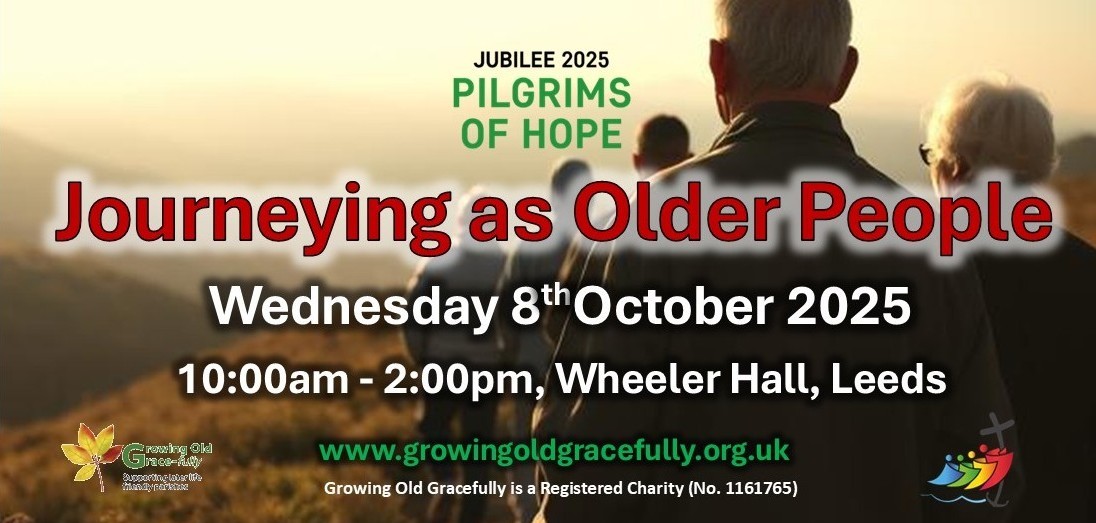
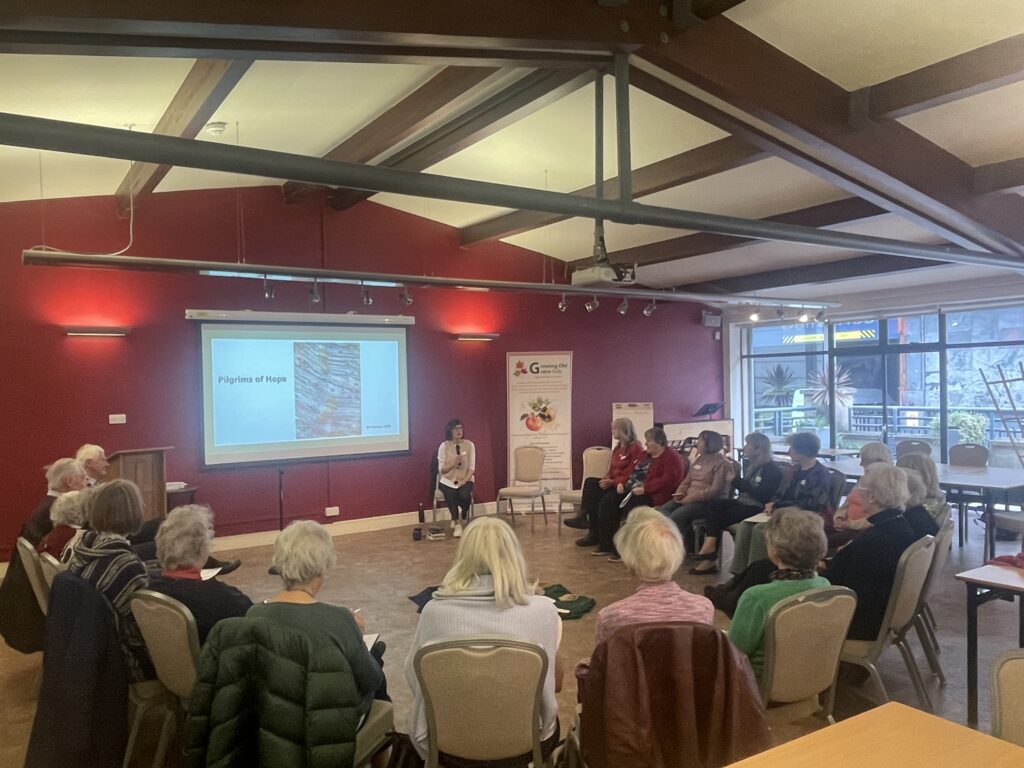
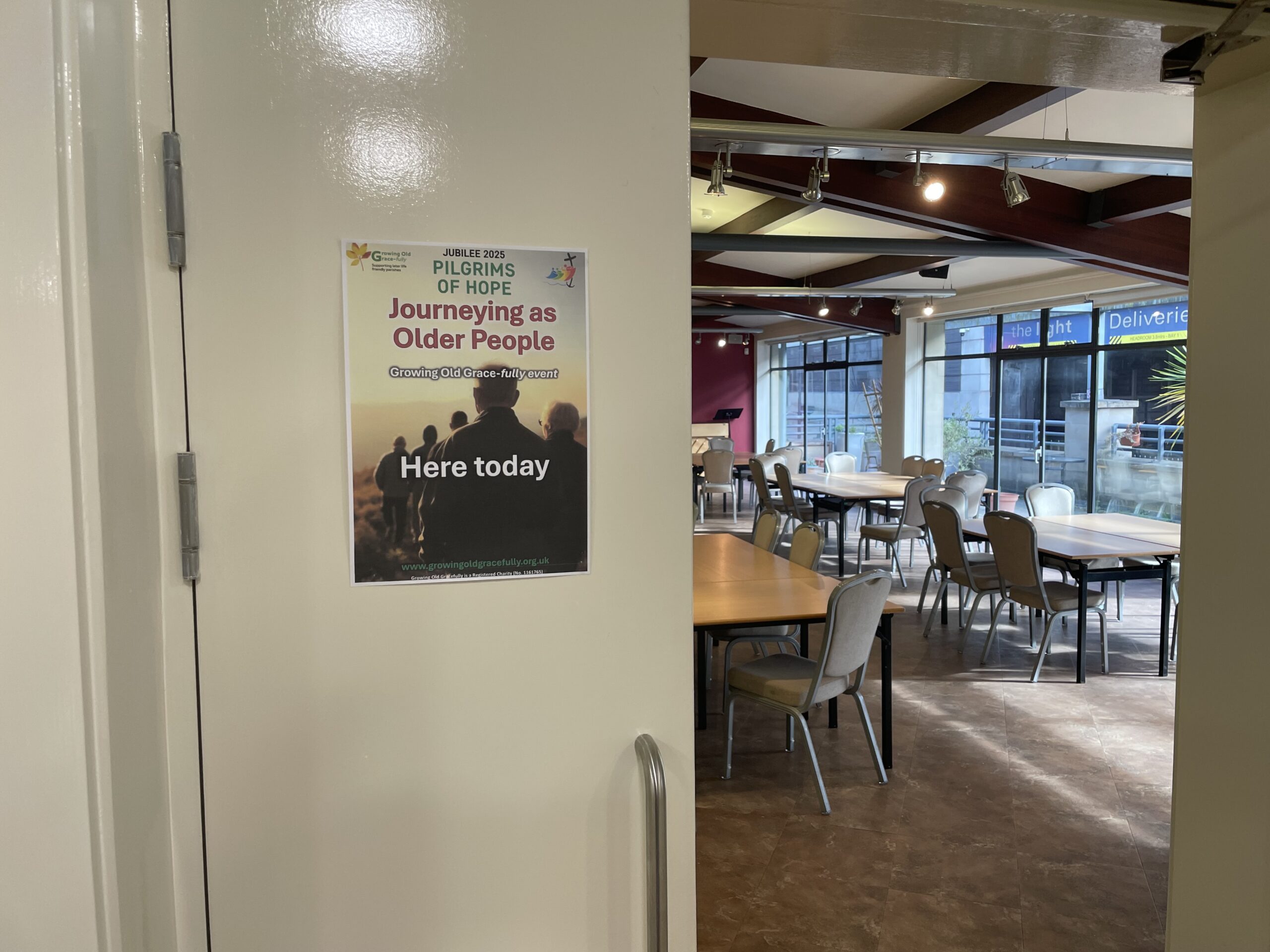
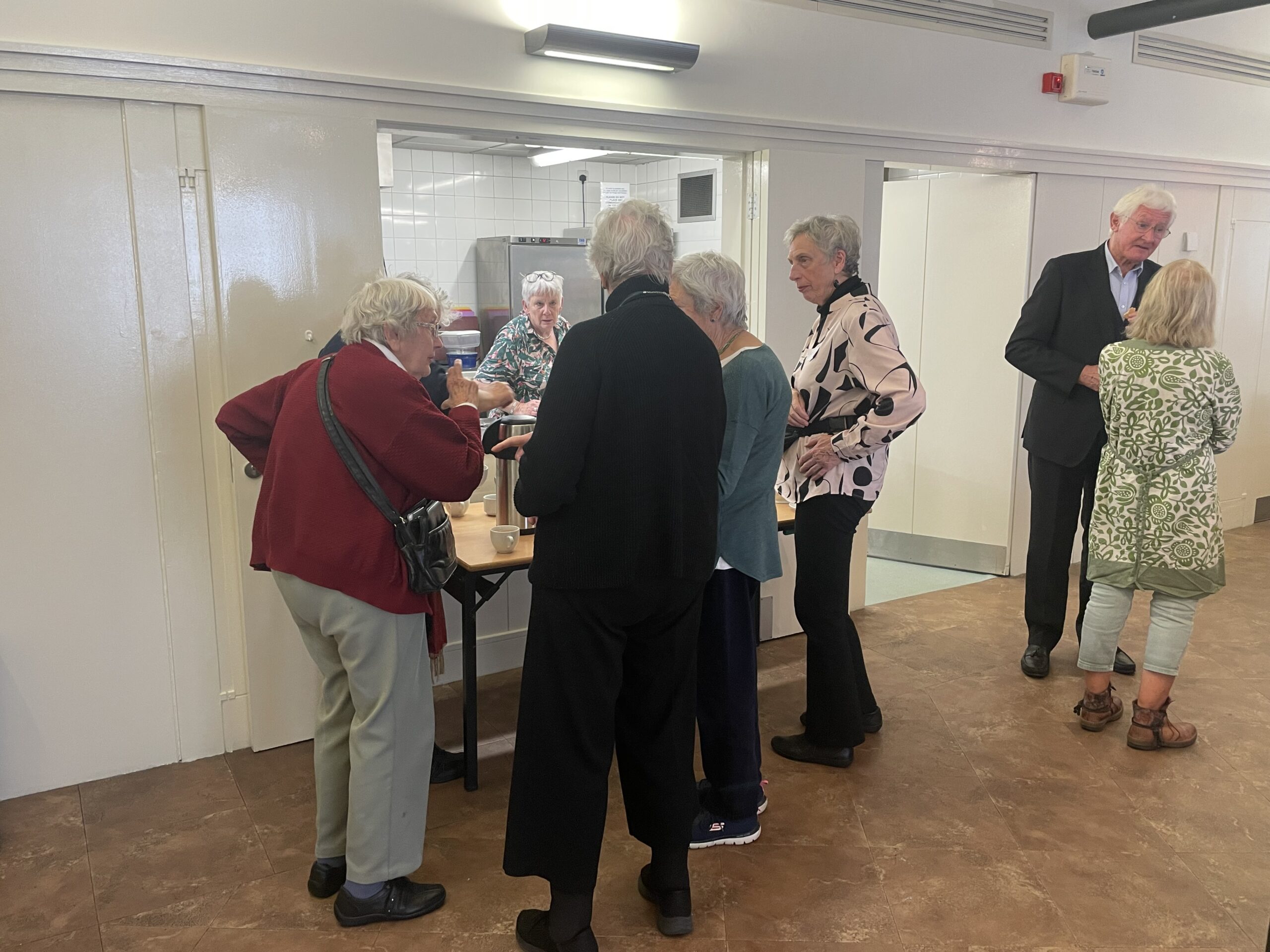
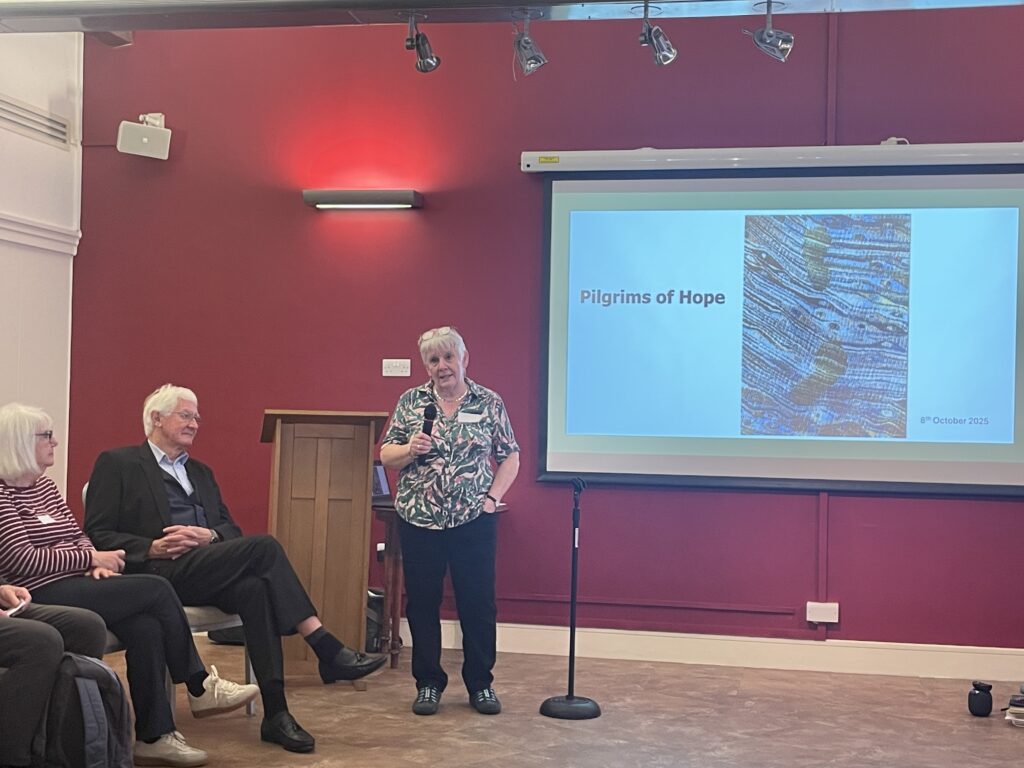
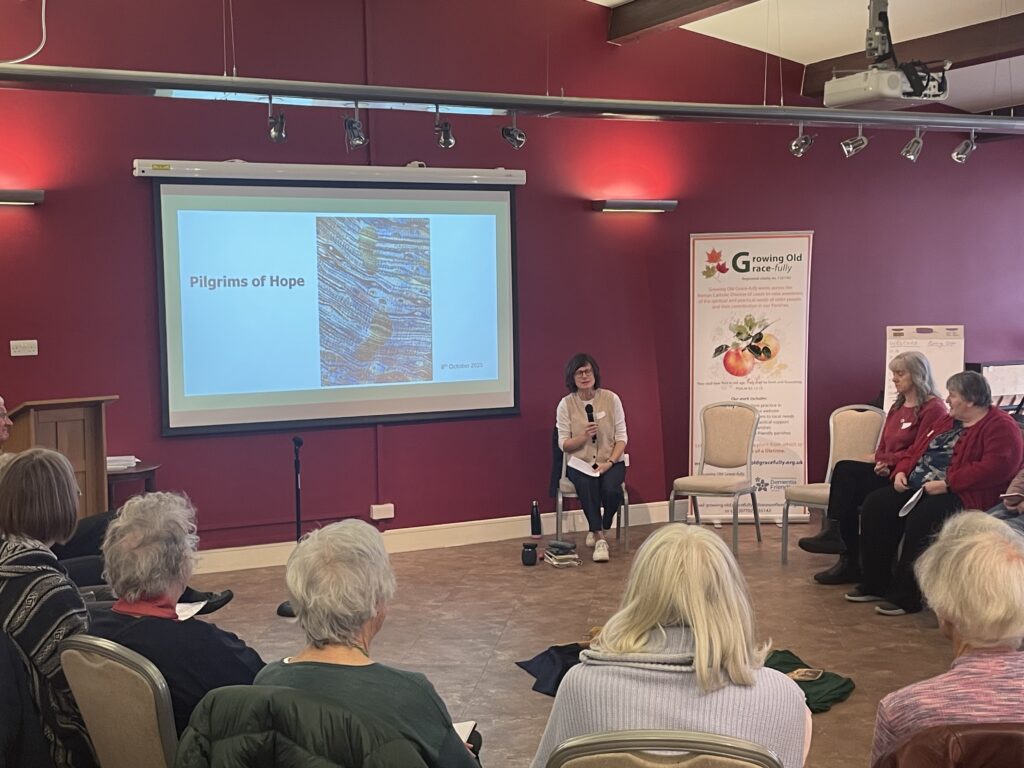
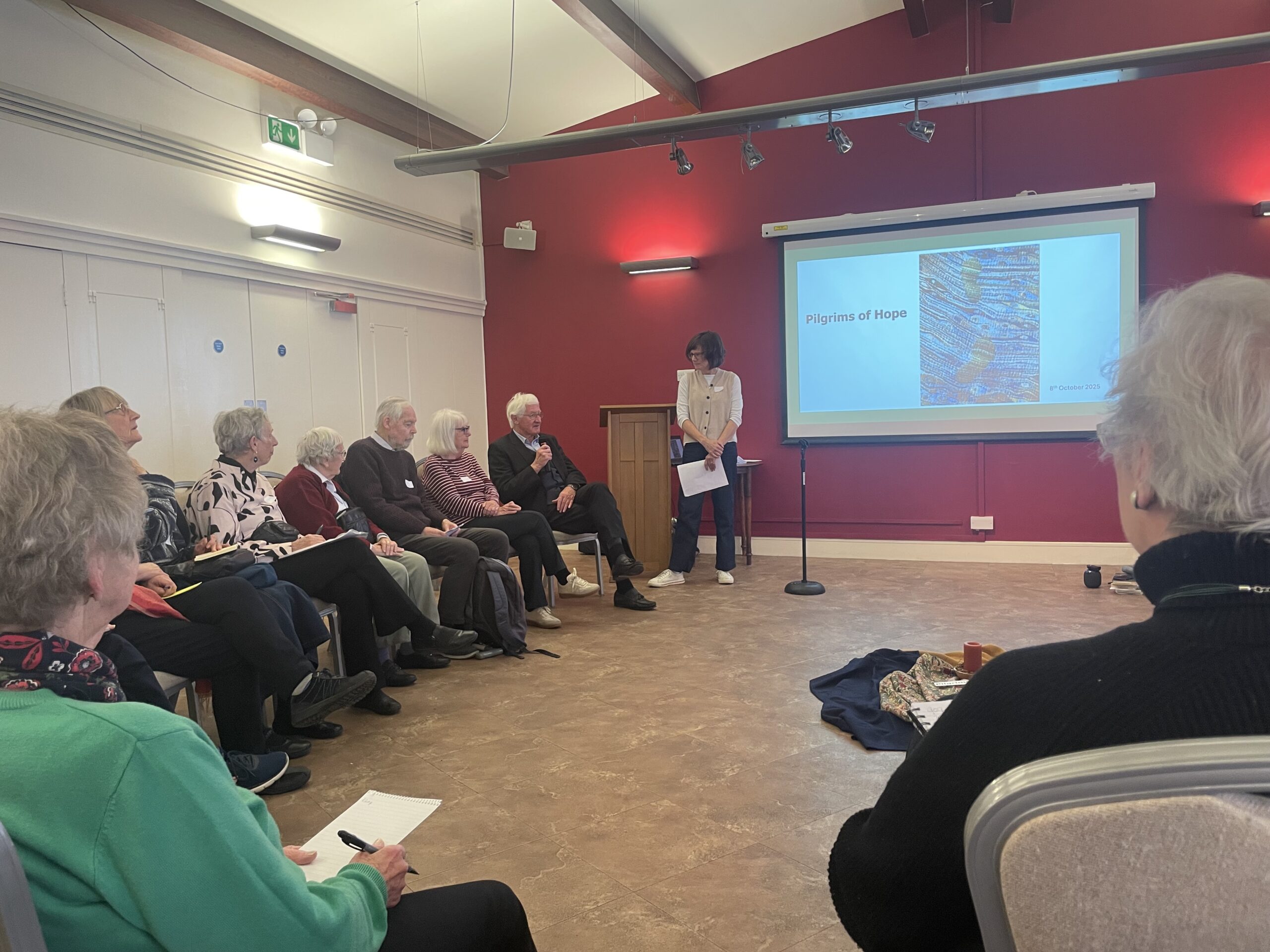
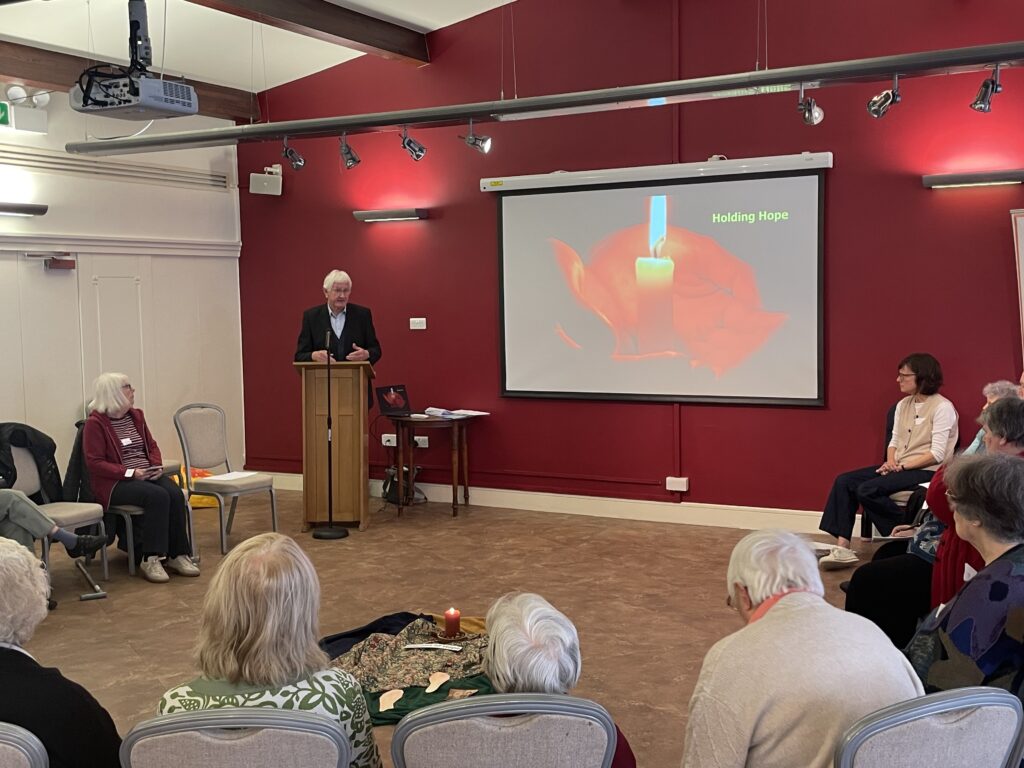
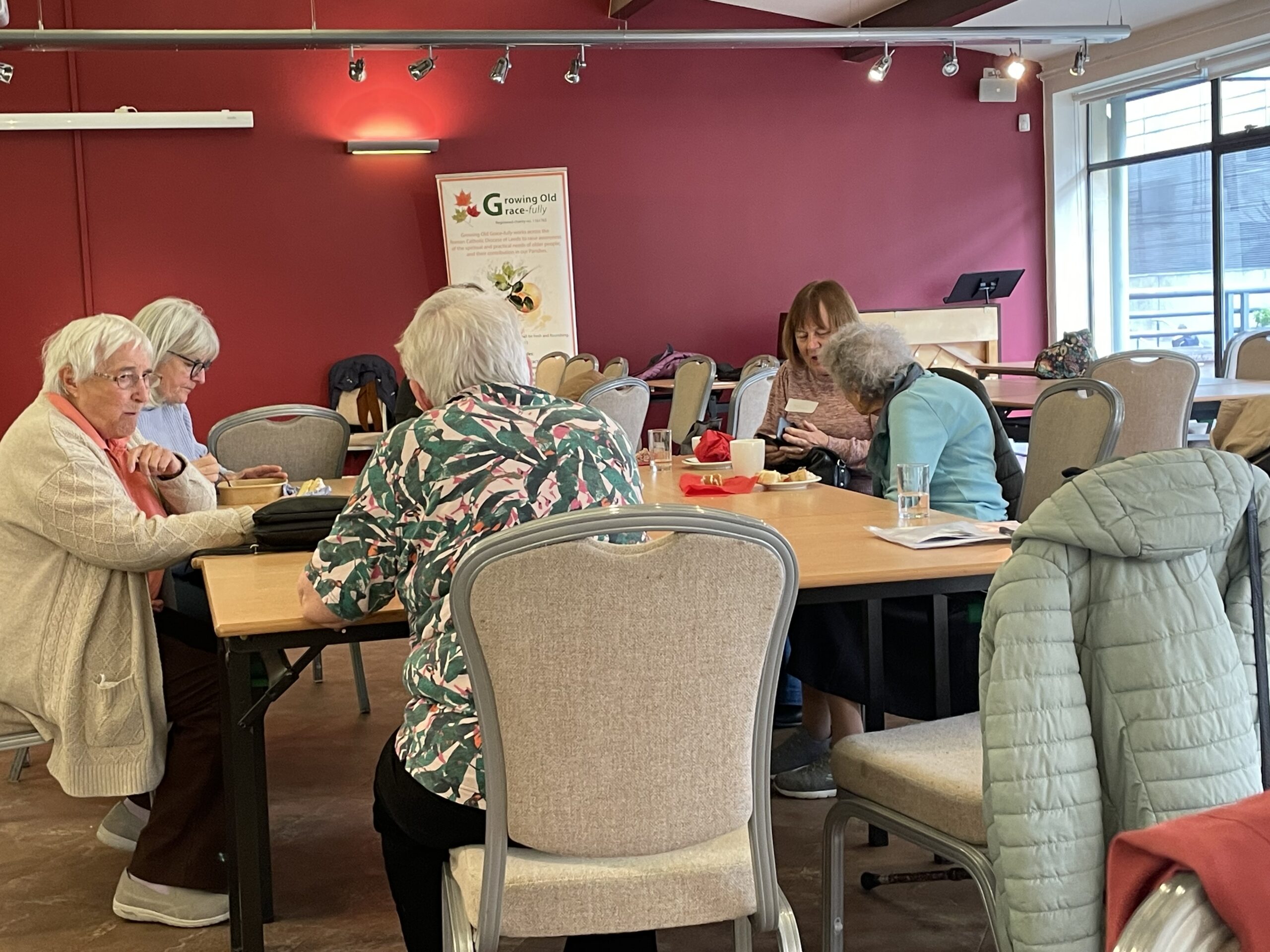
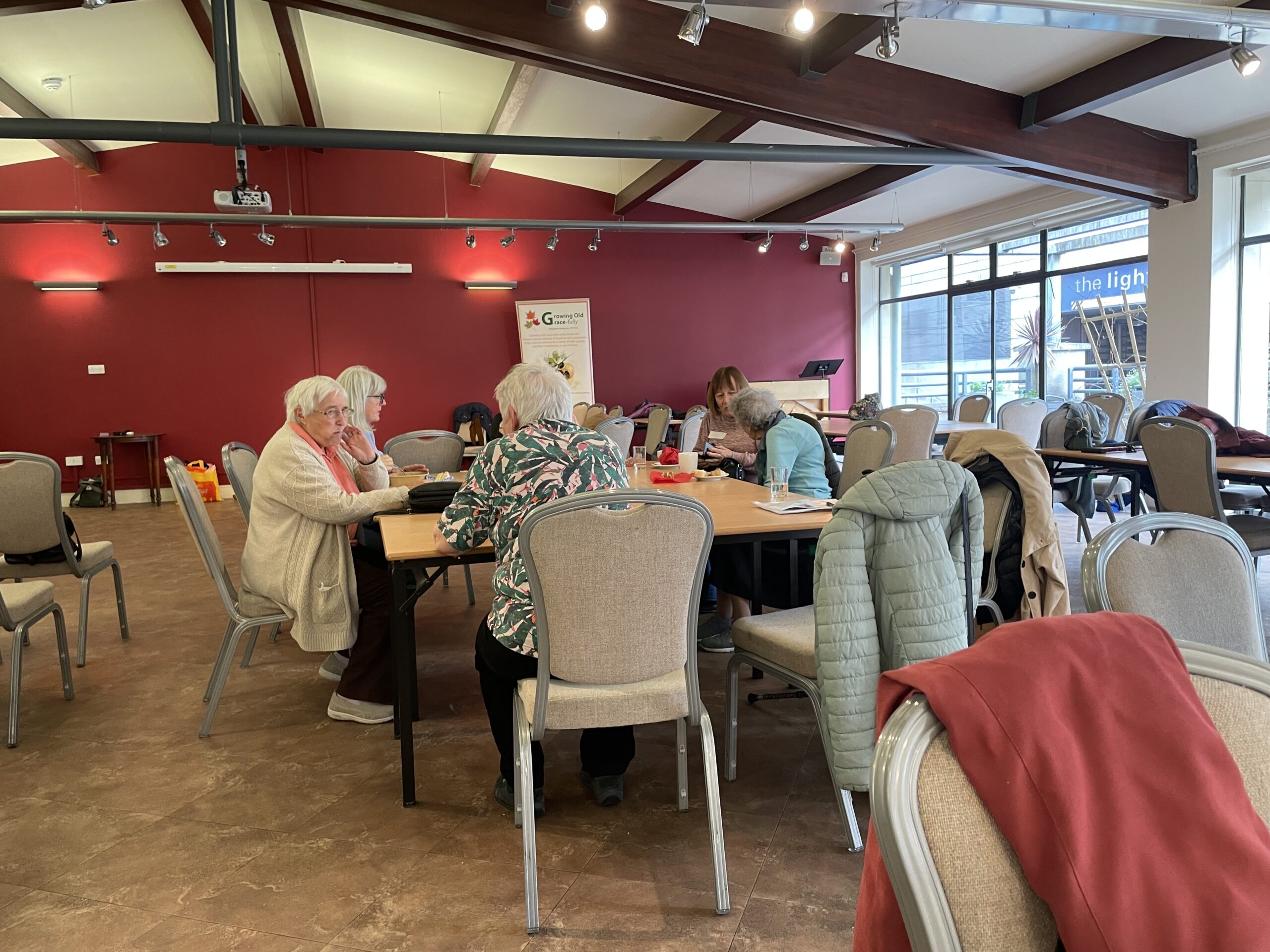
On Wednesday 8th October 2025, Growing Old Grace-fully welcomed people to Cathedral Hall, formerly Wheeler Hall, a beautiful, accessible space behind Leeds Cathedral, for a morning of reflection as part of the Catholic Church’s Jubilee Year 2025: Pilgrims of Hope.
After registration and welcome refreshments, Carol Burns, Growing Old Grace-fully’s Chair of Trustees, introduced the event, led by Paula Shanks and Mgr. Donal Lucey.
Paula introduced the theme of the morning by briefly reviewing the themes of the ‘Doorways of Hope’ series of reflections that have taken place on Zoom throughout this year of Pilgrimage: First of all, seeing Glimpses of Hope, then Living in the Flow of Hope and then Holding Hope throughout life. She explained that the invitation for people was for a deeper sense of themselves as pilgrims of hope in their daily lives at this stage of life.
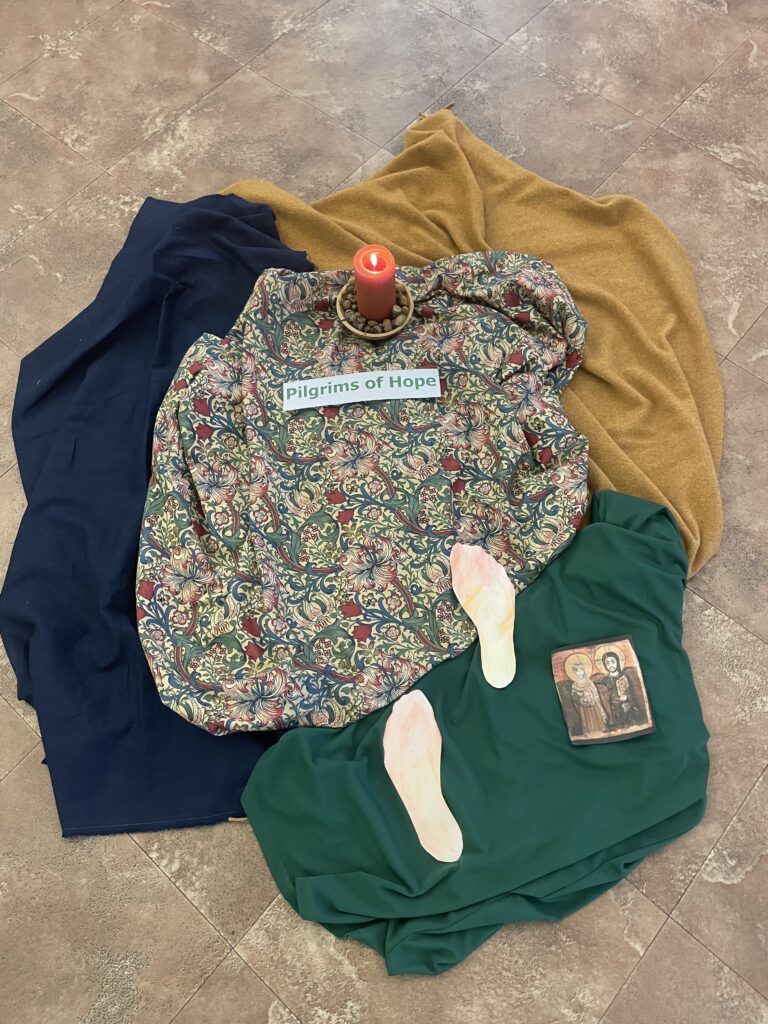
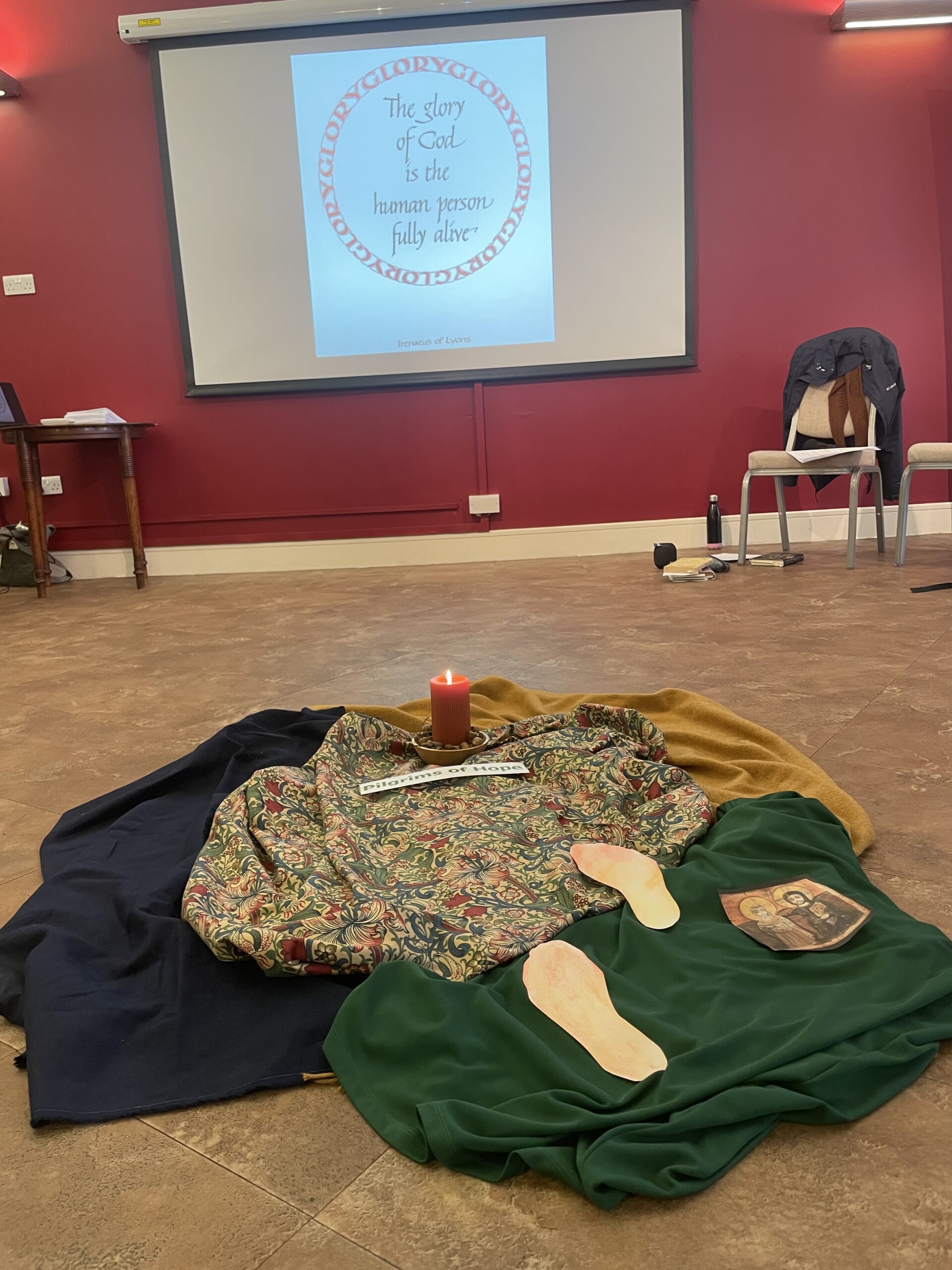
The morning of reflection then began with a stilling – a time of guided prayer. A candle was lit within a centrepiece, which had been placed in the centre of the circle.
Paula gently guided the group in a time of prayer to settle their bodies and minds and become still and centred. She based this on a quote by Fr Richard Rohr, ‘God’s love is the still point and centre of this turning world.’
The group were asked to notice their hopes and desires for the morning and to spend some time speaking with God about this. The stilling ended with the group listening to, ‘Be still for the presence of the Lord’ and a time of silence.
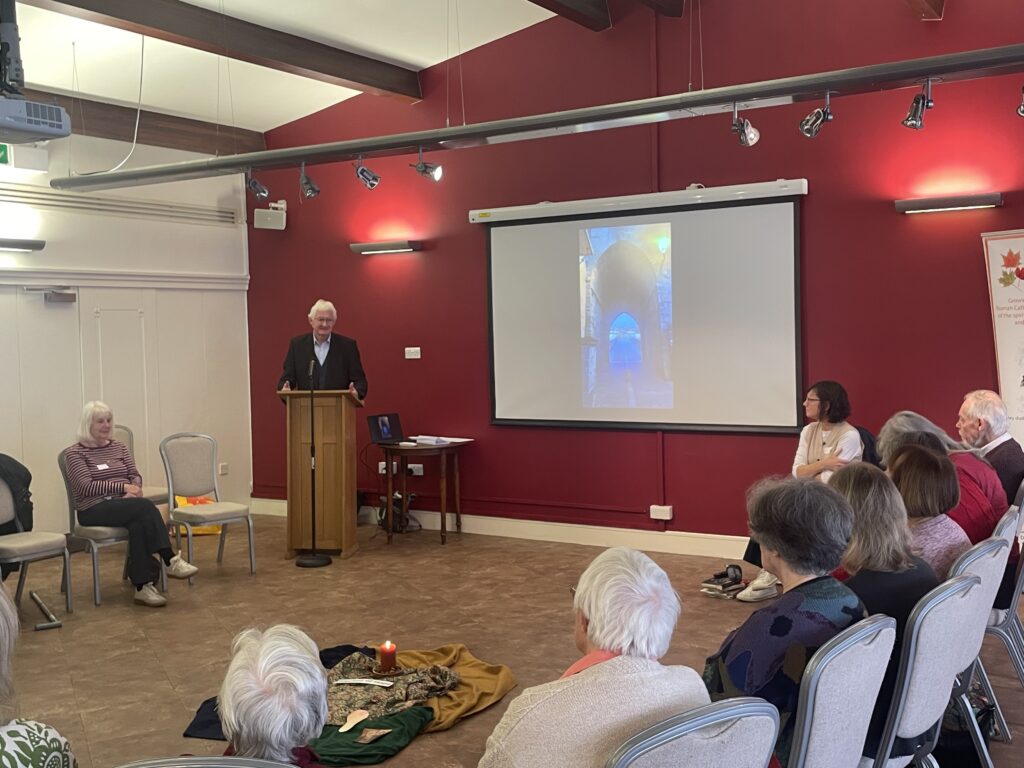
The first session was led by Mgr Donal who spoke about our history of being pilgrims. He explored the theme of the journey of our lives and acknowledged the importance of each different stage.
He quoted from the poem Somewhere by RS Thomas, “The point of travelling is not to arrive, but to return homeladen with pollen you shall work up into the honey the mind feeds on“.
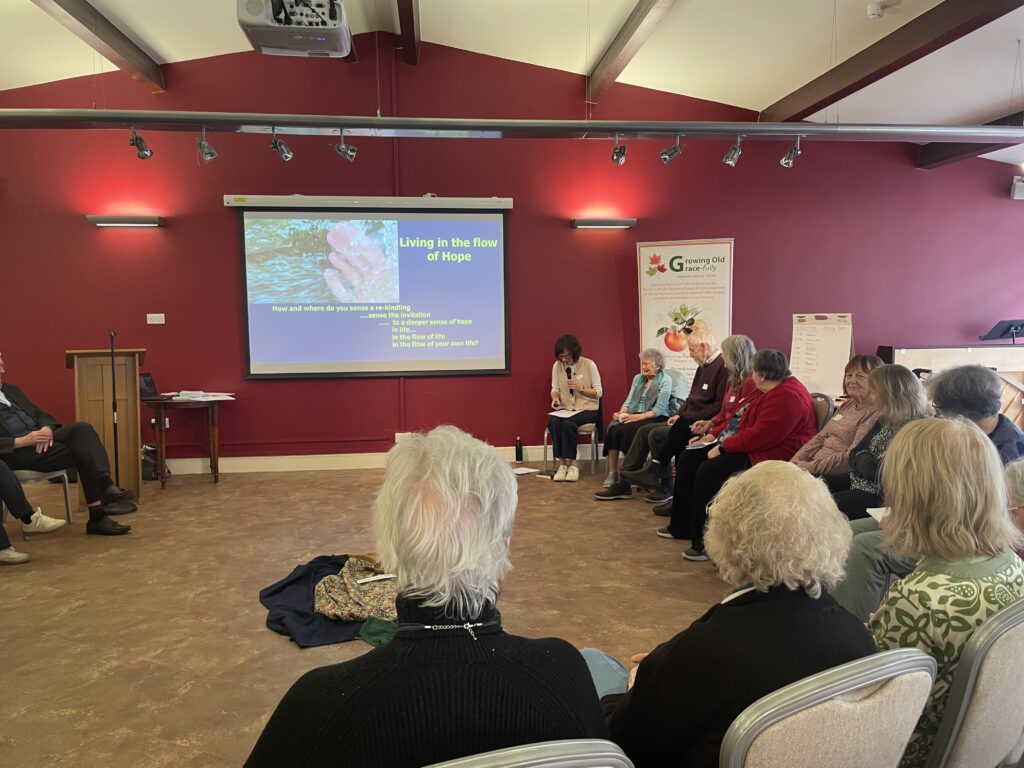
Paula then explored aspects of the themes ‘Glimpses of Hope’ and ‘Living in the Flow of Hope’. She used images, music, poetry and time for silent reflection to help the group to go deeper and open their awareness more fully the presence of Hope in their lives. To notice the glimpses of Hope offer within each day and the places where there is a sense of ‘flow’ within their lives and within themselves. To see these all as places of invitation to a deeper sense of God’s presence and love that is already with them. A time of prayer then followed using Lectio Davina on Psalm 23 and the group were given some questions for personal reflection.
Mgr Donal then spoke to the group on the final theme, ‘Holding Hope in a Fragile World.’ He explored the fragility of the world and how the wisdom, faith and strength of older people are all gifts that the world needs.
He also stressed the gifts of encouragement and time that we have to offer, particularly to the younger people in our lives.
The morning concluded with a closing liturgy based on the theme of being pilgrims. Isaiah 40: 28-31, bidding prayers and a blessing were read by different members of the GOG team.
Paula has prepared a summary sheet from the event, which can be downloaded here.
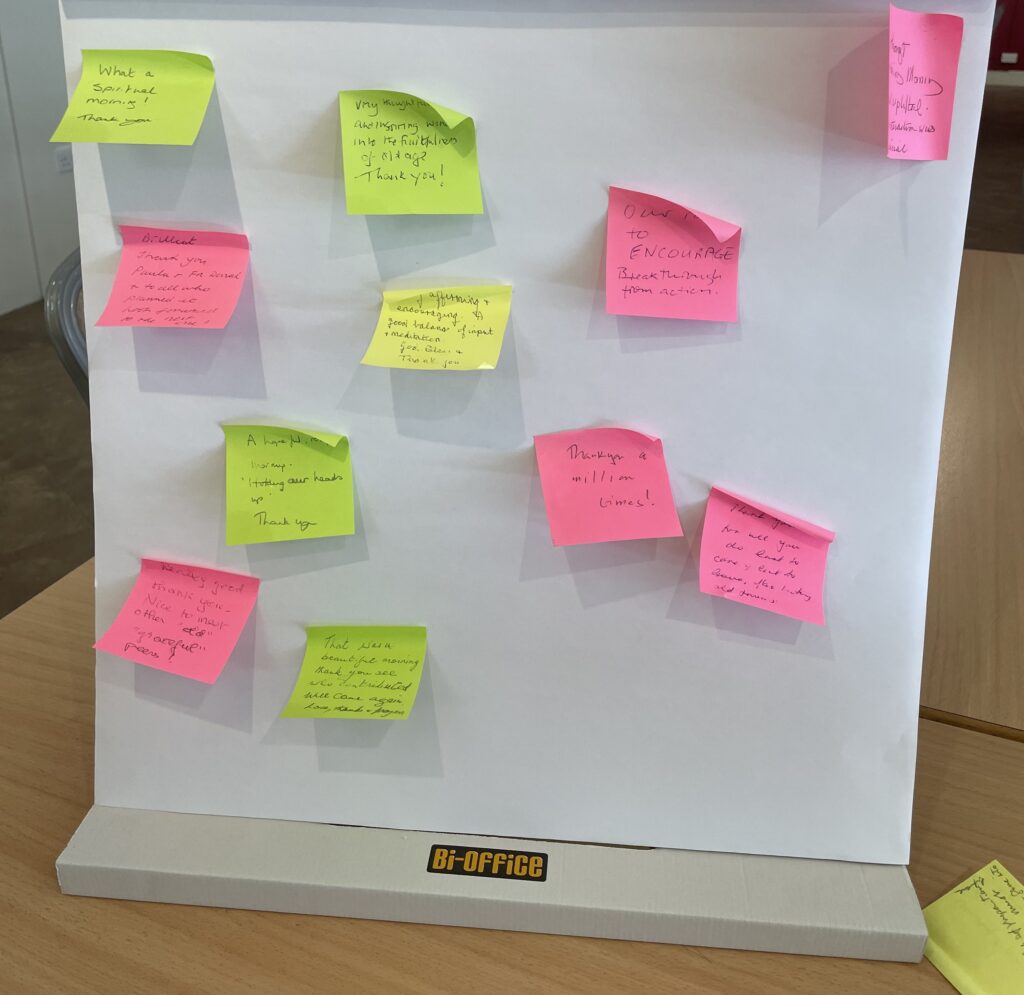
At the end of the event, everyone was invited to leave a thought from the day, a comment or a reflection, and stick it on a feedback board.
The comments people left were as follows:
“Wonderful, powerful presentation with deeply meaningful slides. A lot of preparation and prayer must have gone into it before.”
“A thought provoking morning. I feel uplifted. The interaction was beneficial.”
“Very affirming and encouraging. A good balance of input and meditation. God bless and thank you.”
“Thank you a million times!”
“Really good thank you. Nice to meet other “old” “graceful” peers!”
“Very thoughtful and inspiring window into the fruitfulness of old age. Thank you!”
“Our role – to ENCOURAGE. Breakthrough from action.”
“That was a beautiful morning, thank you all who contributed. Will come again. Love, thanks and prayers.”
The third and final of the Doorways of Hope series of online reflections is Holding Hope, on Thursday 17th July, 7:00pm to 8:00pm.
Paula Shanks and Monsignor Donal Lucey will invite you to notice spaces where hope is held out for us in everyday life and the ways in which we do this for others.
This is part of the invitation to be ‘Pilgrims of Hope’ – the theme of the Jubilee Year 2025 – looking at ways of noticing the nature and presence of hope, what it means to live this hope and how we can share hope with others in our ordinary, daily lives.
On Wednesday 14th May 2025, we held the second in the Doorways of Hope series of online reflections, Living in Hope, led by Paula Shanks and Mgr. Donal Lucey & Paula Shanks, as part of the Pilgrims of Hope Jubilee year.
Living in Hope explores how living in the flow of life offers invitations to a deeper sense of hope..